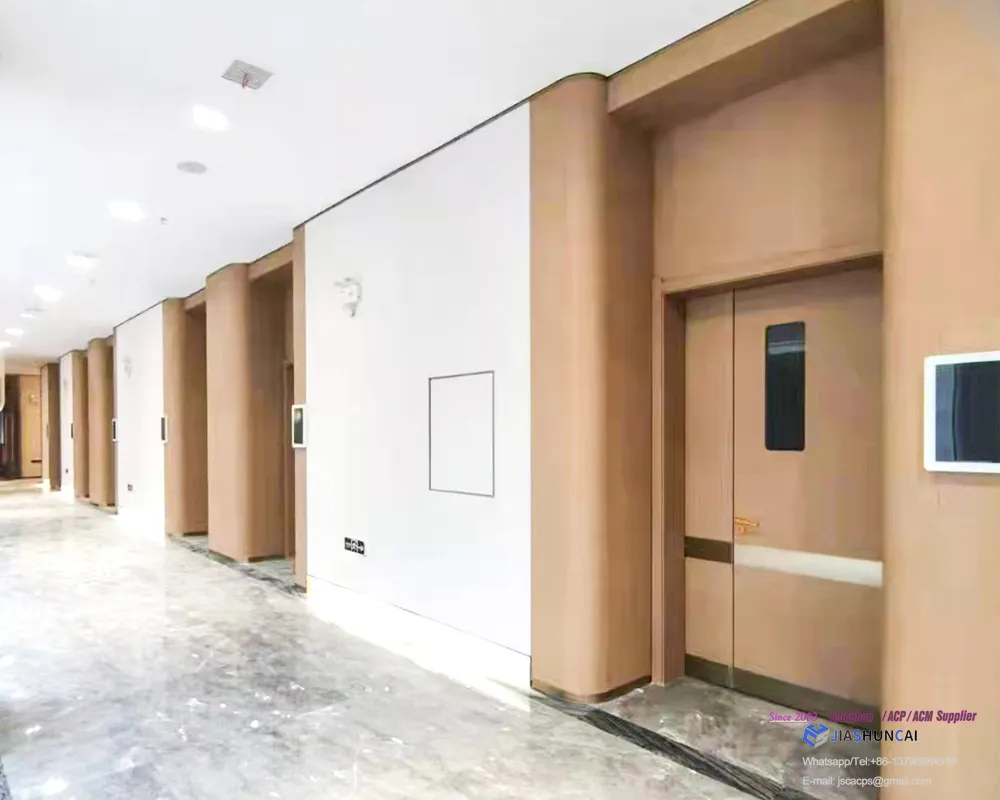
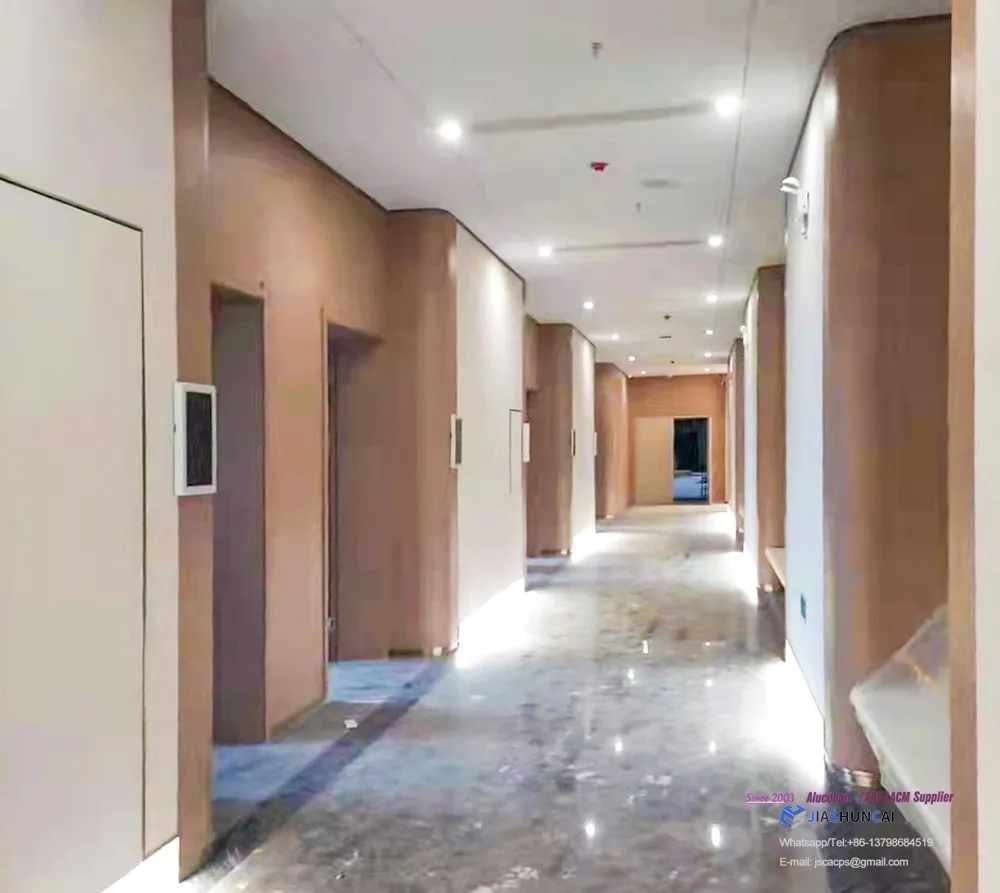
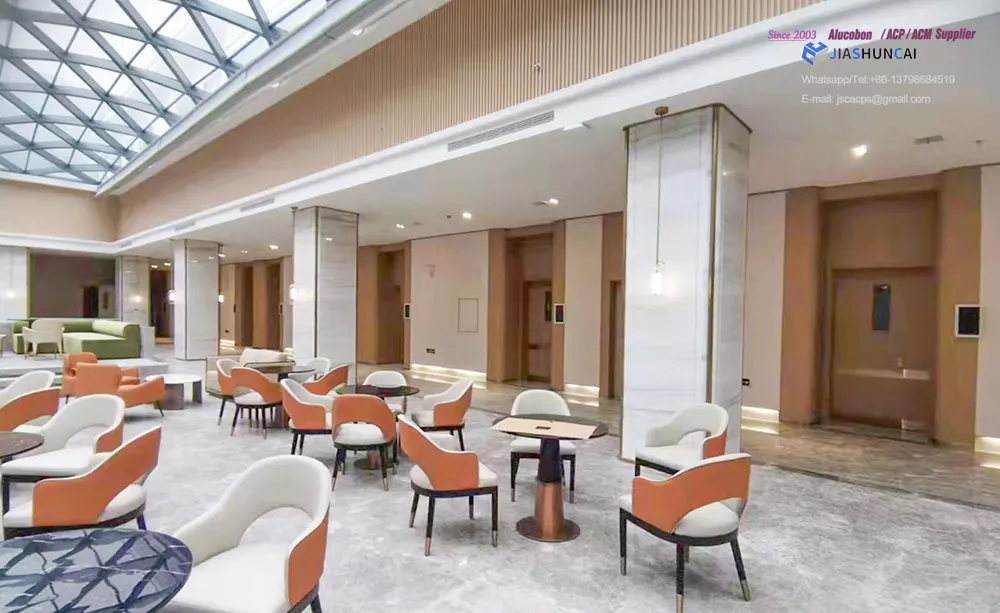
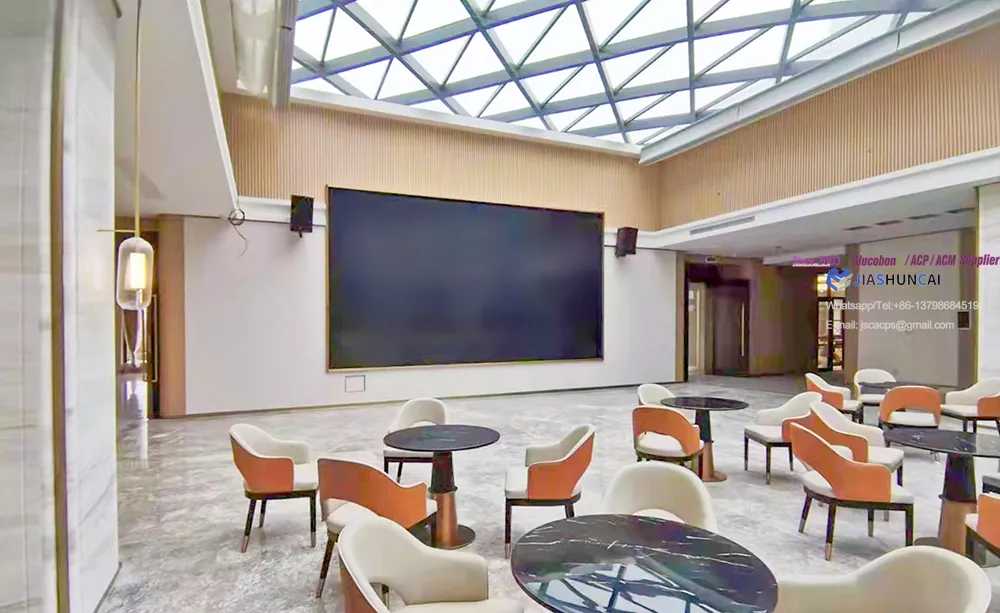
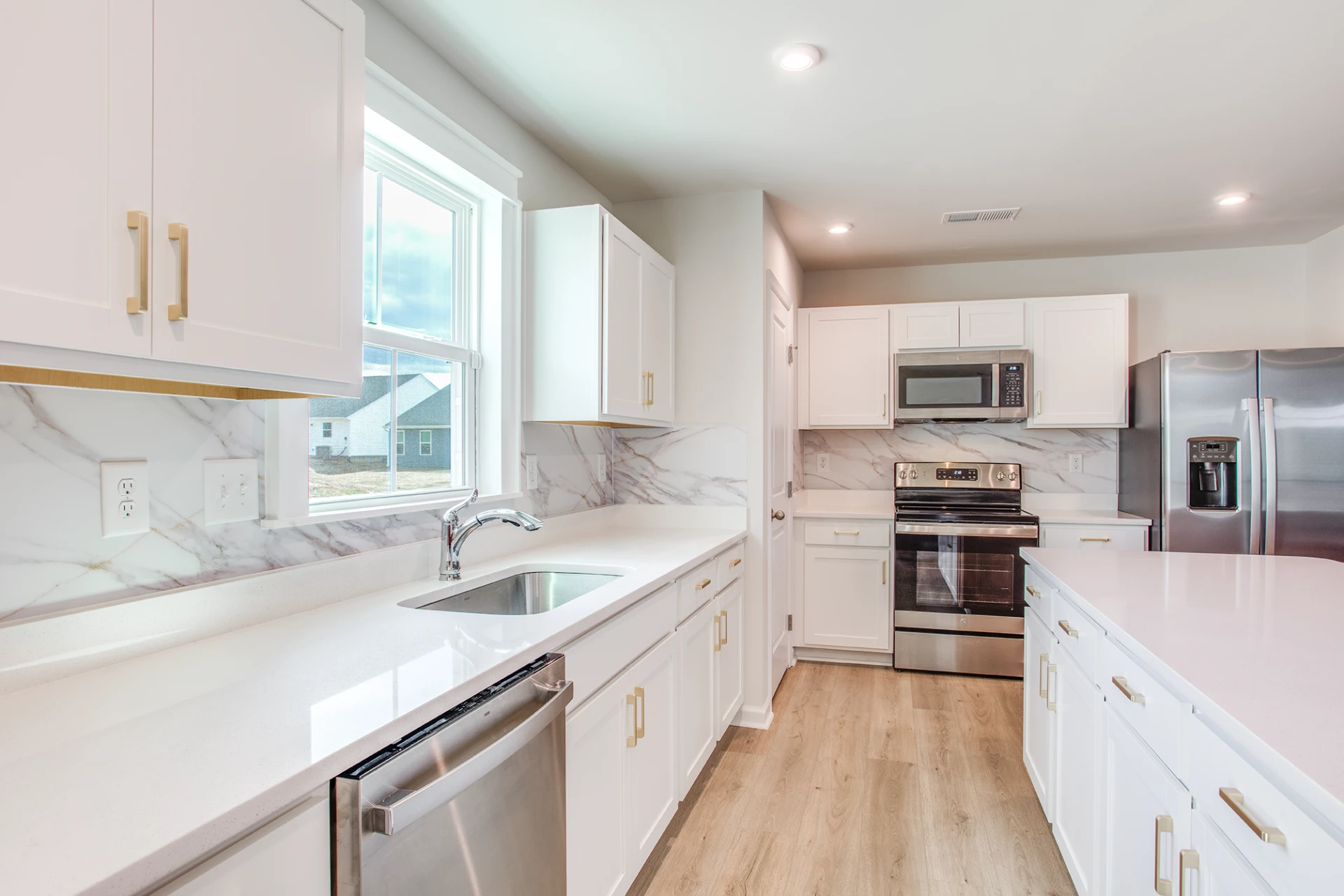
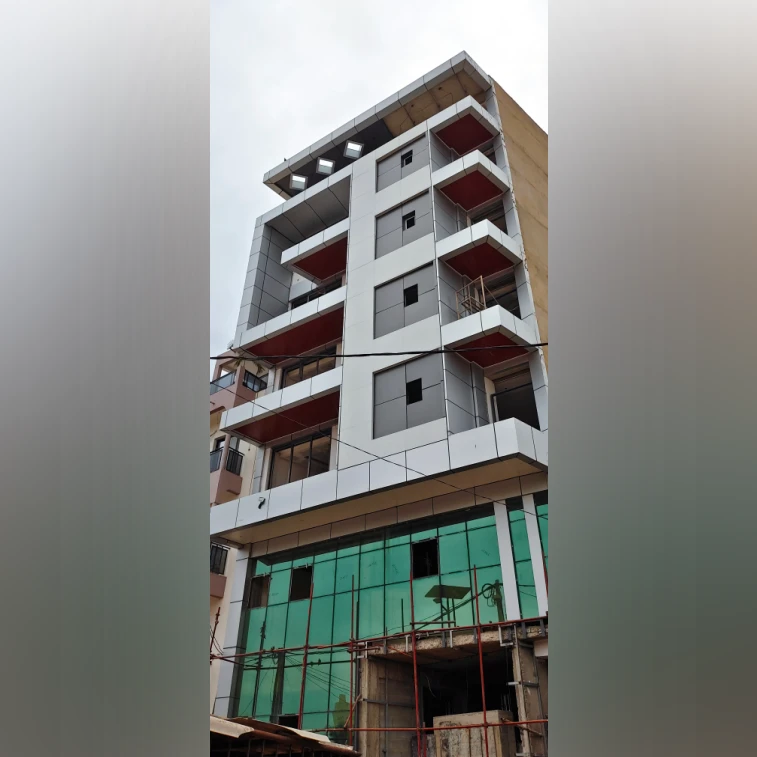
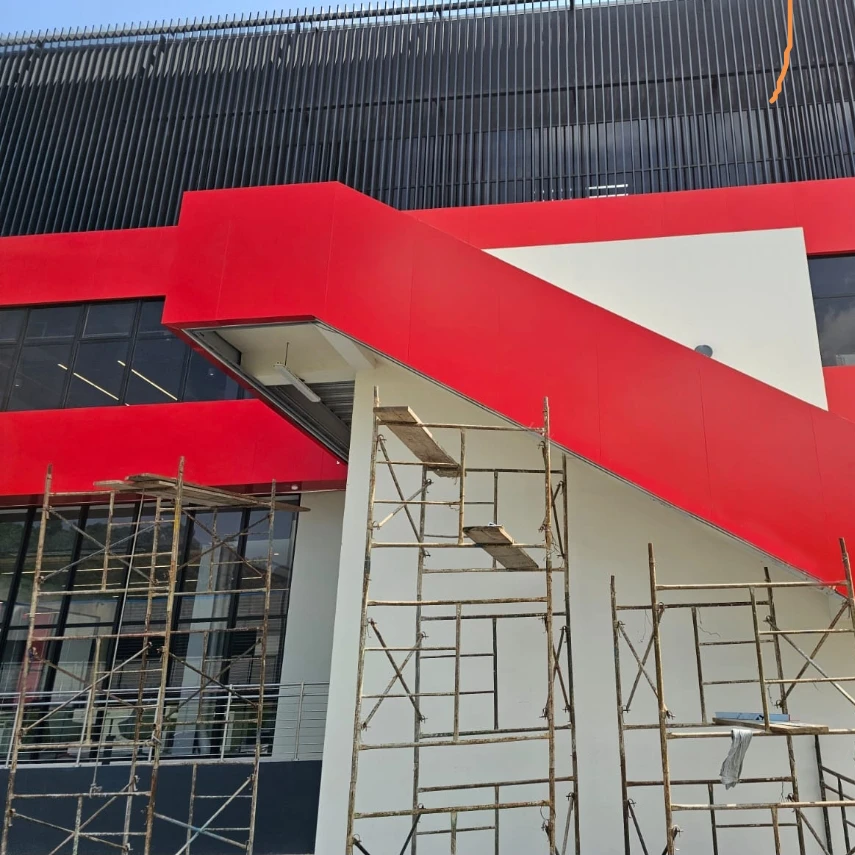
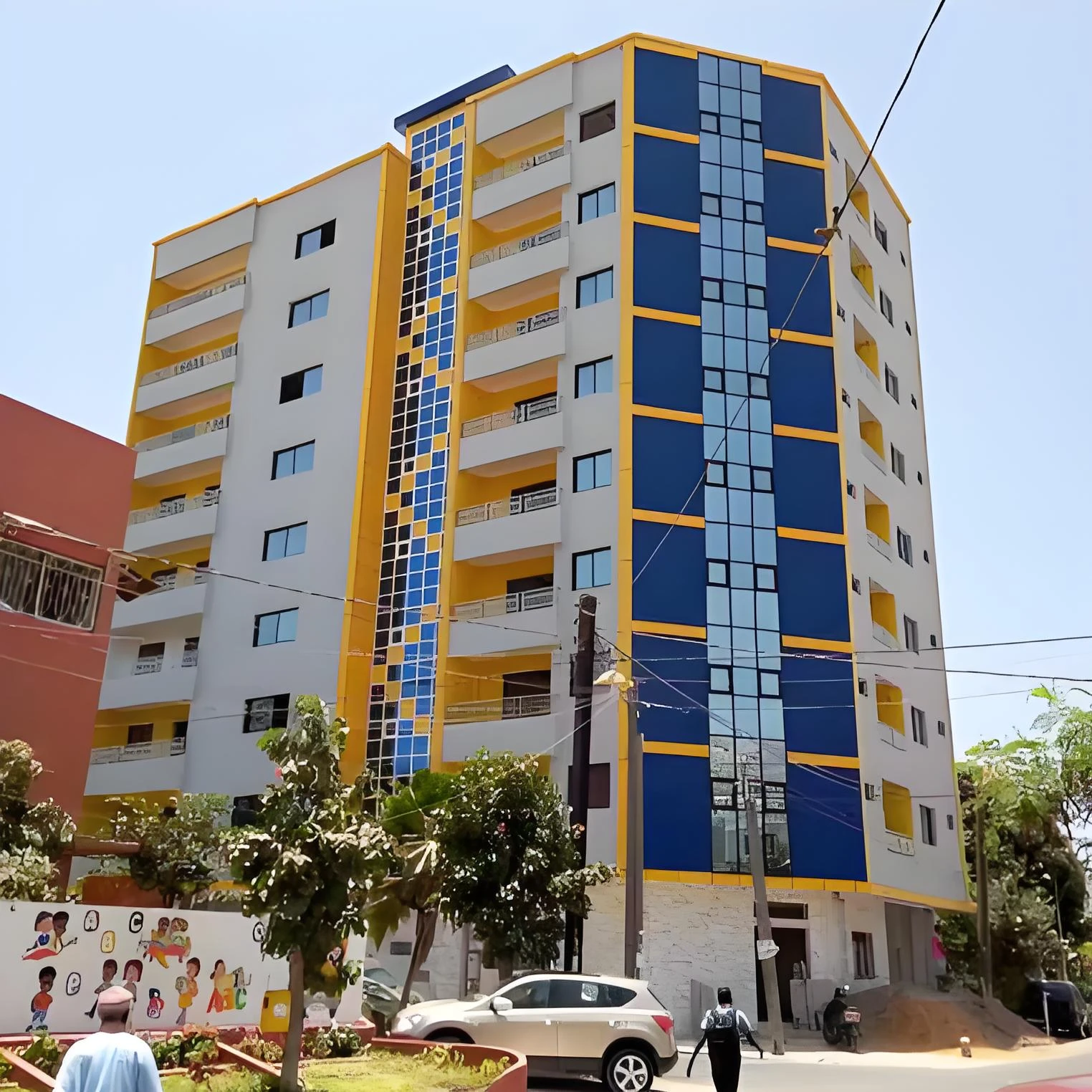
The interior is decorated with a large amount of fireproof metal panels in light colors and wood grain, which is simple and elegant. It is paired with square stone-grain wrapped columns, creating a low-luxury atmosphere with a hint of natural charm.
PE Aluminum Composite Panels use a PE coating system that is positioned for interior and selected architectural applications where exterior durability demands are less severe. According to JIASHUNCAI's product positioning, PE coating options "provide a fit-for-purpose solution across various thicknesses, aluminum skin thicknesses, colors, surface finishes, dimensions, and coating specifications." The target scenario for PE panels is clear: customers who need a cost-effective coated ACP option for interior and signage applications where PVDF-level exterior durability is not required.
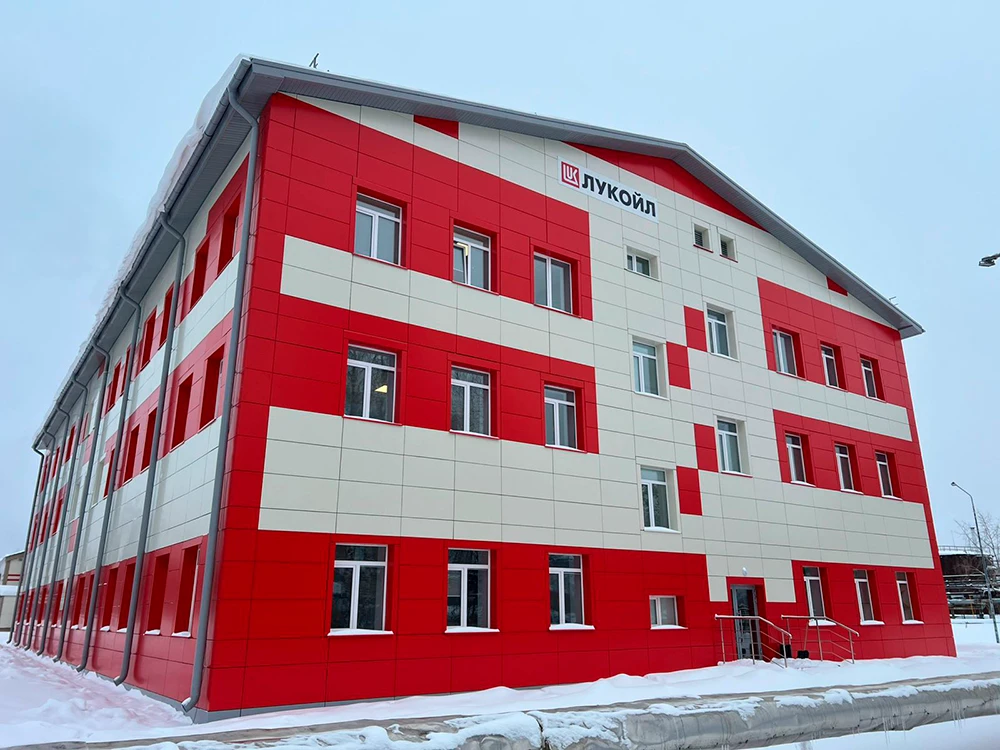
PVDF Aluminum Composite Panels, by contrast, are formulated specifically for "applications requiring enhanced exterior durability and weather resistance." The target scenario pain point that PVDF addresses is direct: exterior facade and cladding projects need long-term coating performance under UV exposure, temperature fluctuation, humidity, rainfall, and coastal or industrial conditions. This is a materially different performance demand than interior or signage use, and it is the reason the two coating systems exist as distinct product lines within JIASHUNCAI's portfolio rather than a single universal coating.
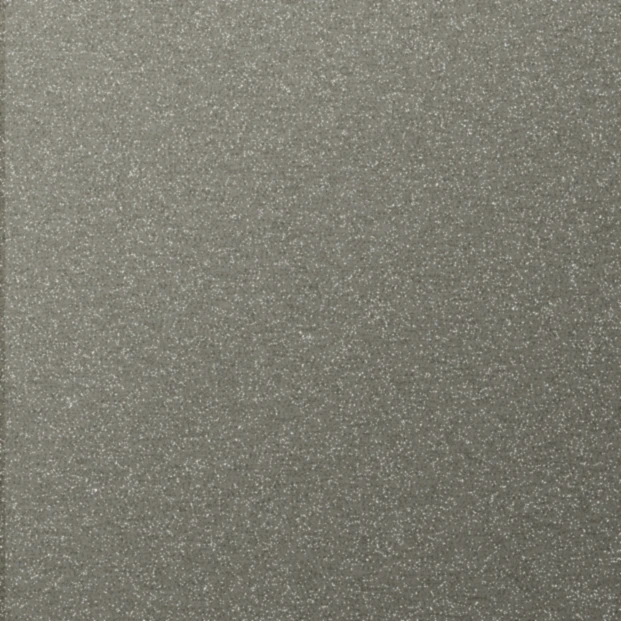
See how PVC film and roller-coated aluminum composite panels performed after approximately six months of outdoor sun exposure. Learn why surface treatment matters for ACP weather resistance and color retention.
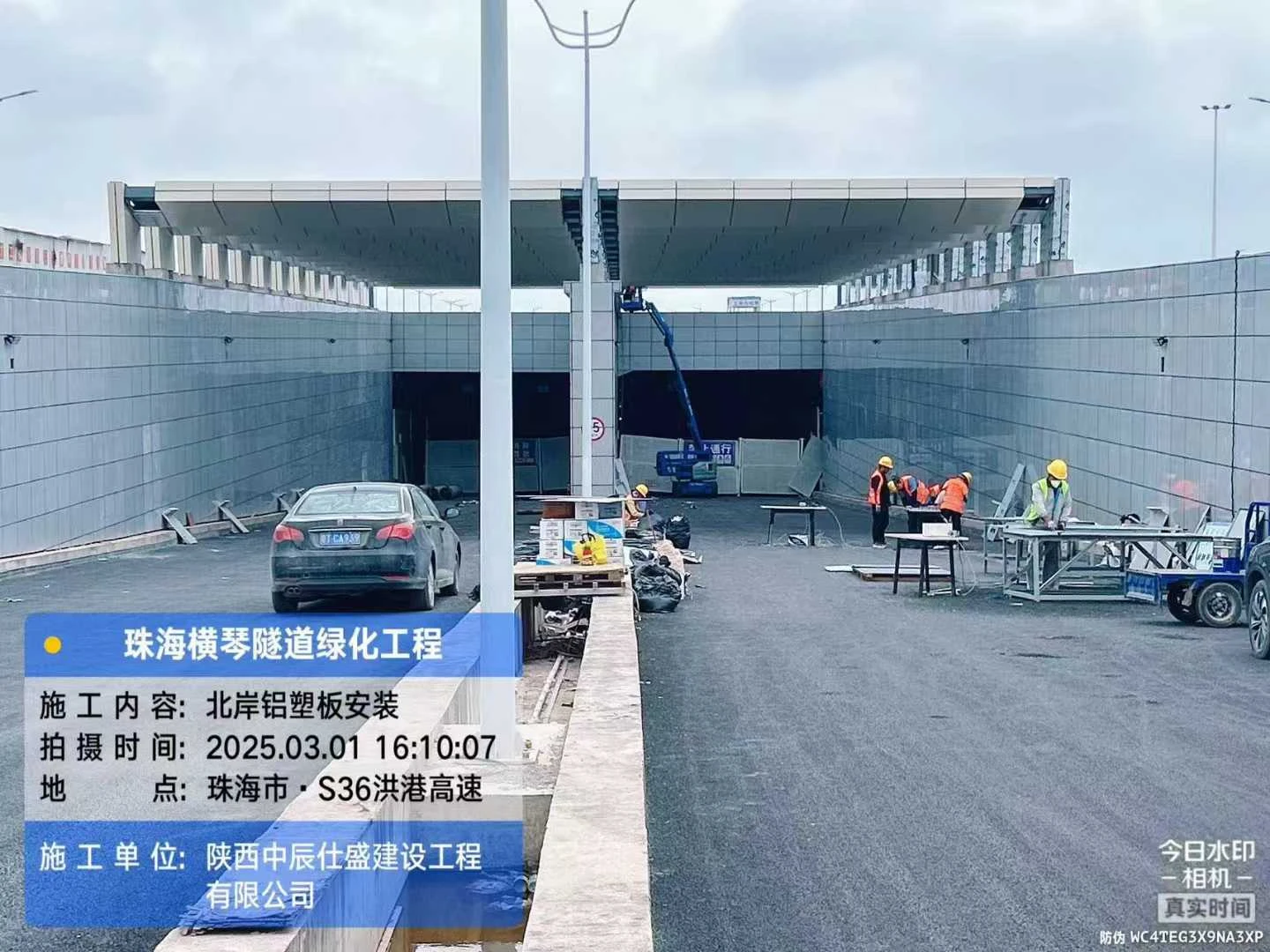
JIASHUNCAI is proud to announce another successful overseas project. Our B1 Fire Rated Aluminum Composite Panel (ACP/ACM) has been installed in a building project located in Almaty, Kazakhstan, demonstrating the reliability and quality of our fire-rated metal composite panels for international construction applications.
One of the highlights of this project is that its location can be found on 2GIS, allowing customers and partners to verify the project location and better understand the real-world application of JIASHUNCAI products.
Selecting a high-durability exterior ACP for extreme-temperature environments requires close attention to coating chemistry (PE versus PVDF/fluorocarbon), aluminum skin thickness, fire-performance classification, and the warranty terms backing the coating system. Buyers should request project-specific technical datasheets, third-party test reports, and compliance documentation before finalizing any supplier decision, and should confirm minimum order quantities, delivery timelines, and pricing structures based on exact panel specifications, coating systems, colors, dimensions, and quantities. Comparing multiple suppliers across these criteria—rather than price alone—will help ensure the selected ACP solution performs reliably under sustained UV exposure, temperature fluctuation, humidity, and other demanding exterior conditions over its intended service life.
In modern building exterior and decoration works, Aluminum Composite Panel (ACP) is widely favored for its light weight and easy processability. Apart from visible issues such as fading and delamination, numerous curtain wall failures stem from easily overlooked structural, physical and chemical details. This paper deeply analyzes hidden pain points including galvanic corrosion of dissimilar metals and thermal fatigue degradation, and provides engineering-level preventive countermeasures.