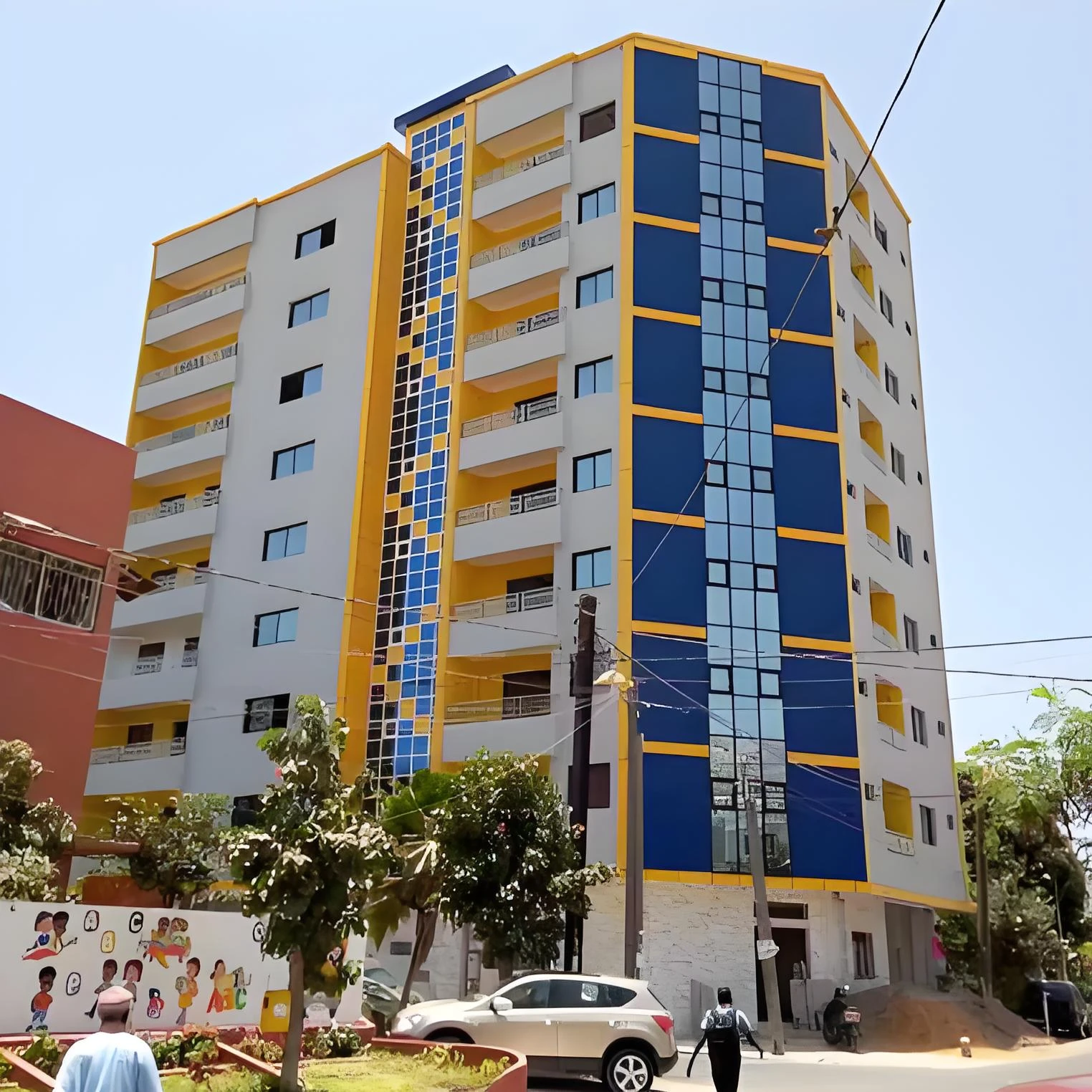
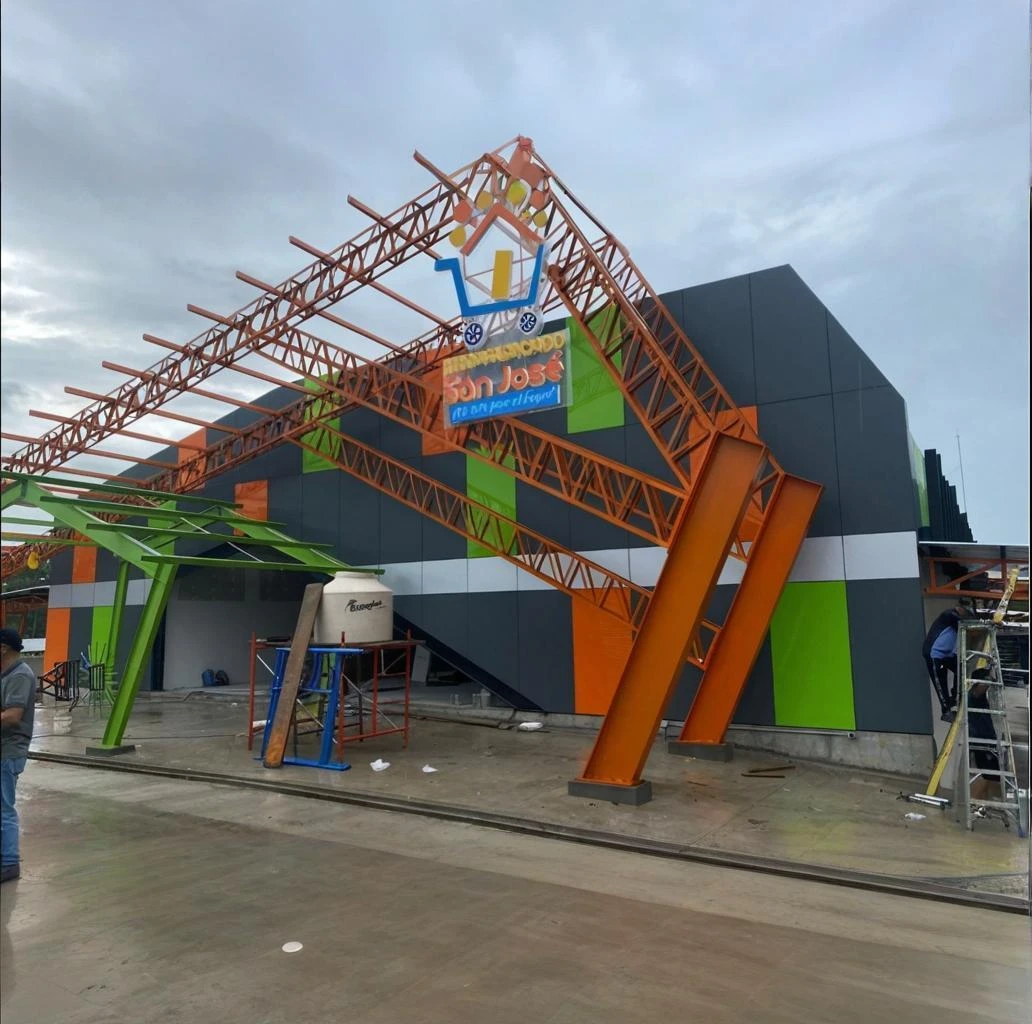
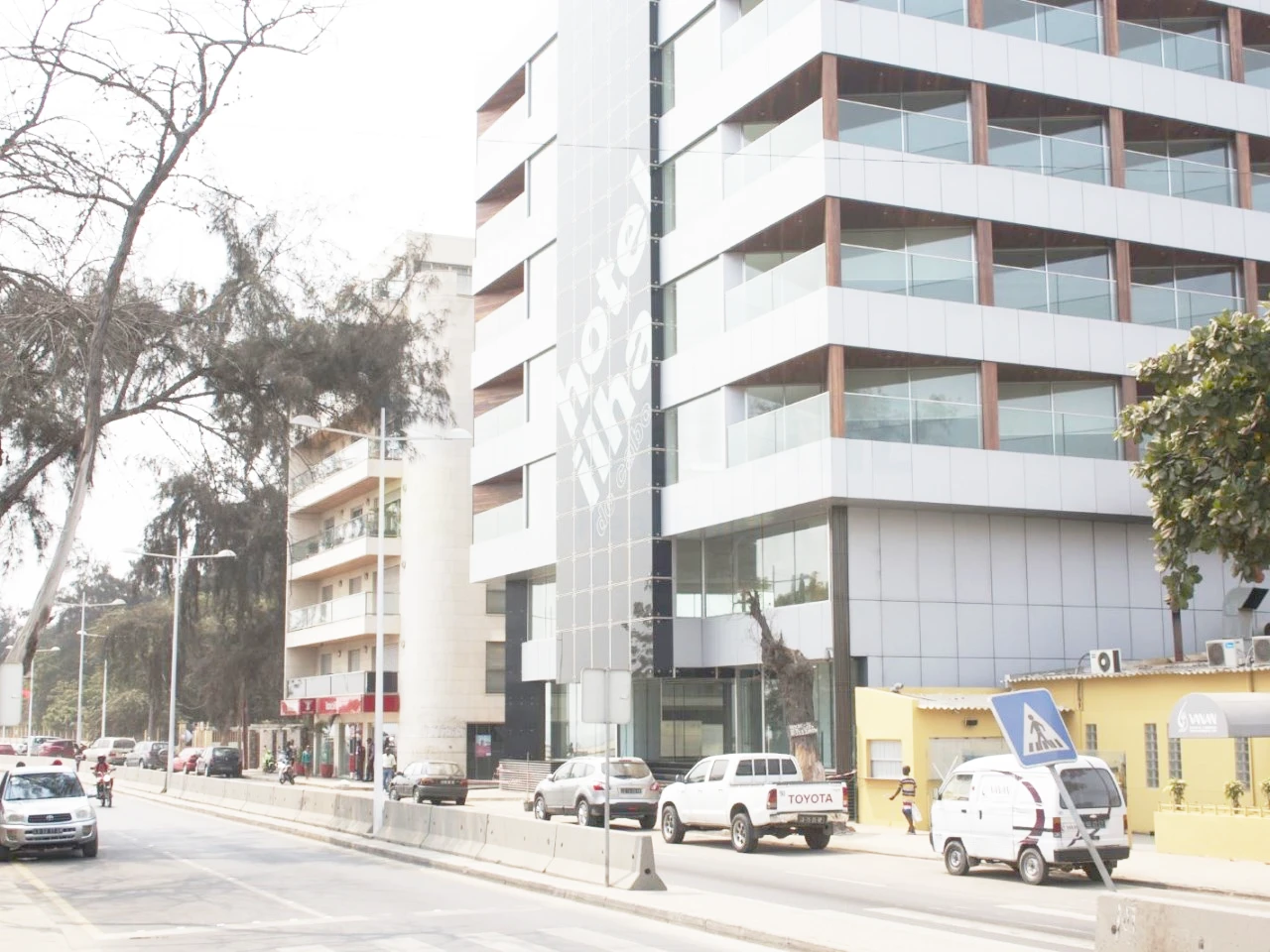
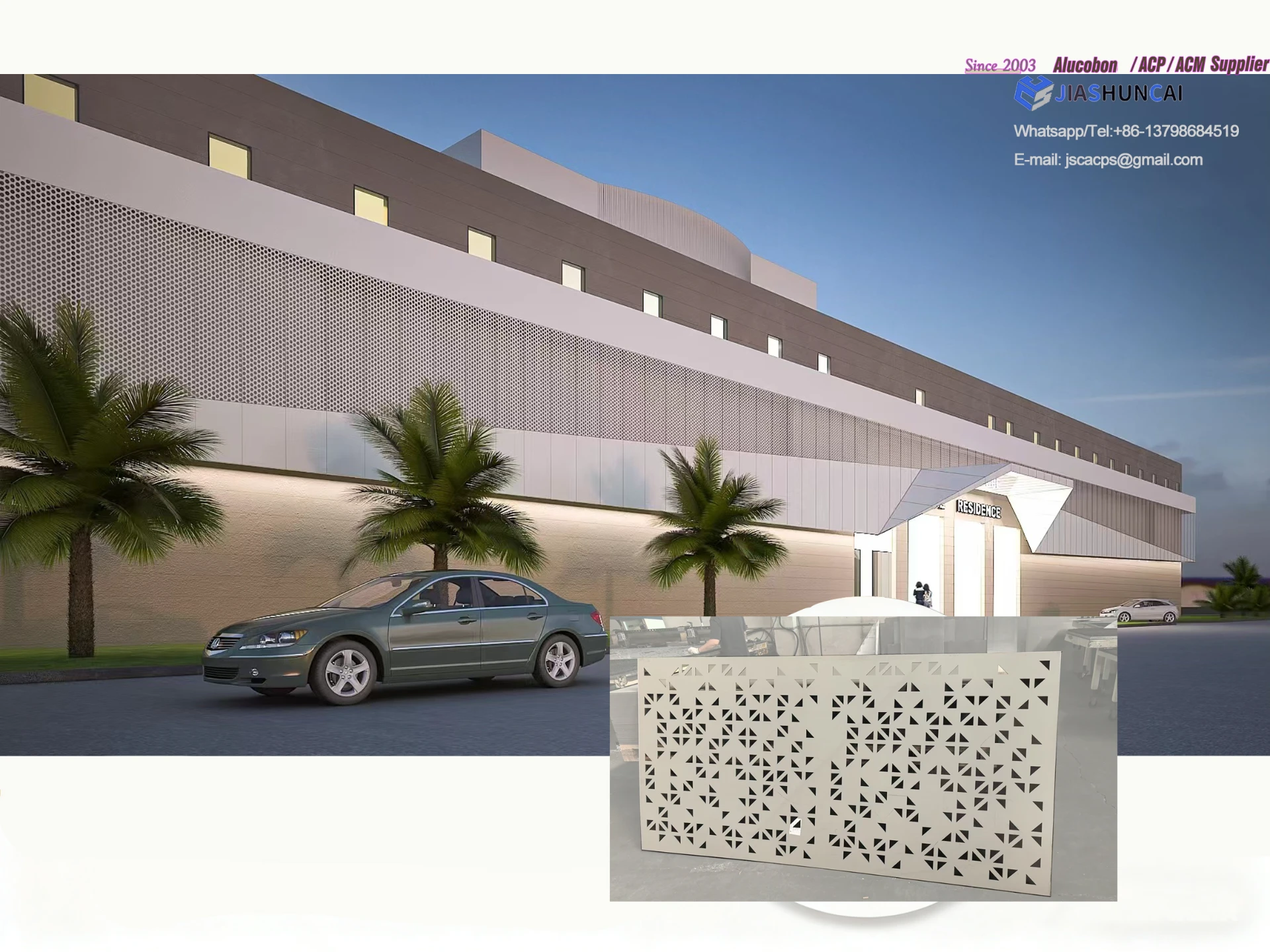
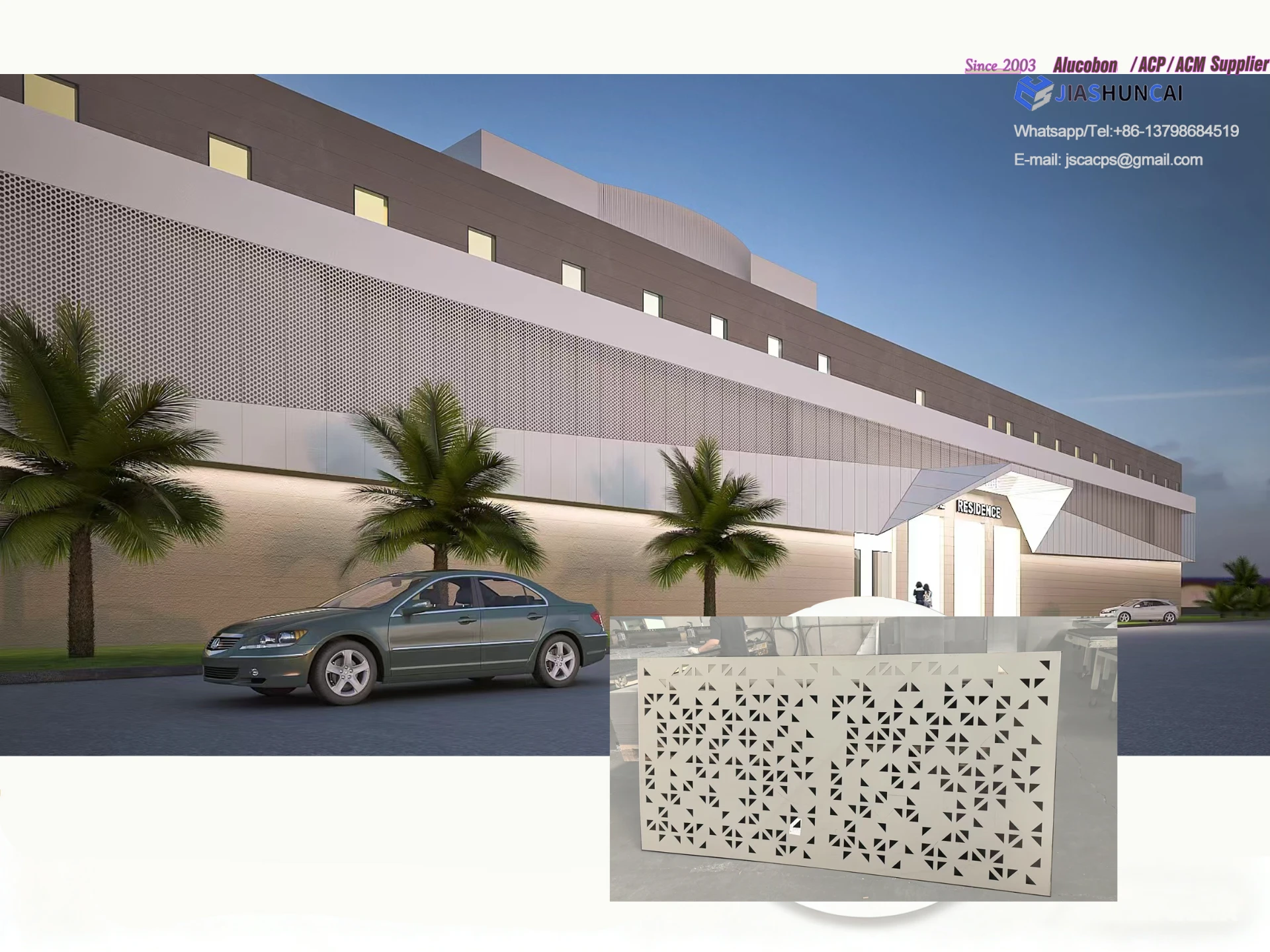
Discover how JIASHUNCAI aluminum composite panels enhance modern supermarket facades using perforated ACP design. Factory direct ACP manufacturer founded in 2003.
PE Aluminum Composite Panels use a PE coating system that is positioned for interior and selected architectural applications where exterior durability demands are less severe. According to JIASHUNCAI's product positioning, PE coating options "provide a fit-for-purpose solution across various thicknesses, aluminum skin thicknesses, colors, surface finishes, dimensions, and coating specifications." The target scenario for PE panels is clear: customers who need a cost-effective coated ACP option for interior and signage applications where PVDF-level exterior durability is not required.
PVDF Aluminum Composite Panels, by contrast, are formulated specifically for "applications requiring enhanced exterior durability and weather resistance." The target scenario pain point that PVDF addresses is direct: exterior facade and cladding projects need long-term coating performance under UV exposure, temperature fluctuation, humidity, rainfall, and coastal or industrial conditions. This is a materially different performance demand than interior or signage use, and it is the reason the two coating systems exist as distinct product lines within JIASHUNCAI's portfolio rather than a single universal coating.
Fireproof ACP procurement decisions should rest on verifiable fire-performance testing, accredited certification, and transparent technical documentation rather than marketing claims alone. Among the manufacturers reviewed, JIASHUNCAI distinguishes itself through a combination of over two decades of manufacturing experience, A2 and B1 fire-performance documentation issued through ILAC-MRA and CNAS accredited laboratories, ISO 9001 quality certification, environmental compliance testing, and an international supply track record spanning more than 80 countries. For buyers prioritizing documented fire safety alongside manufacturing scale and export reliability, this comparative overview offers a starting reference point for further due diligence and project-specific verification.
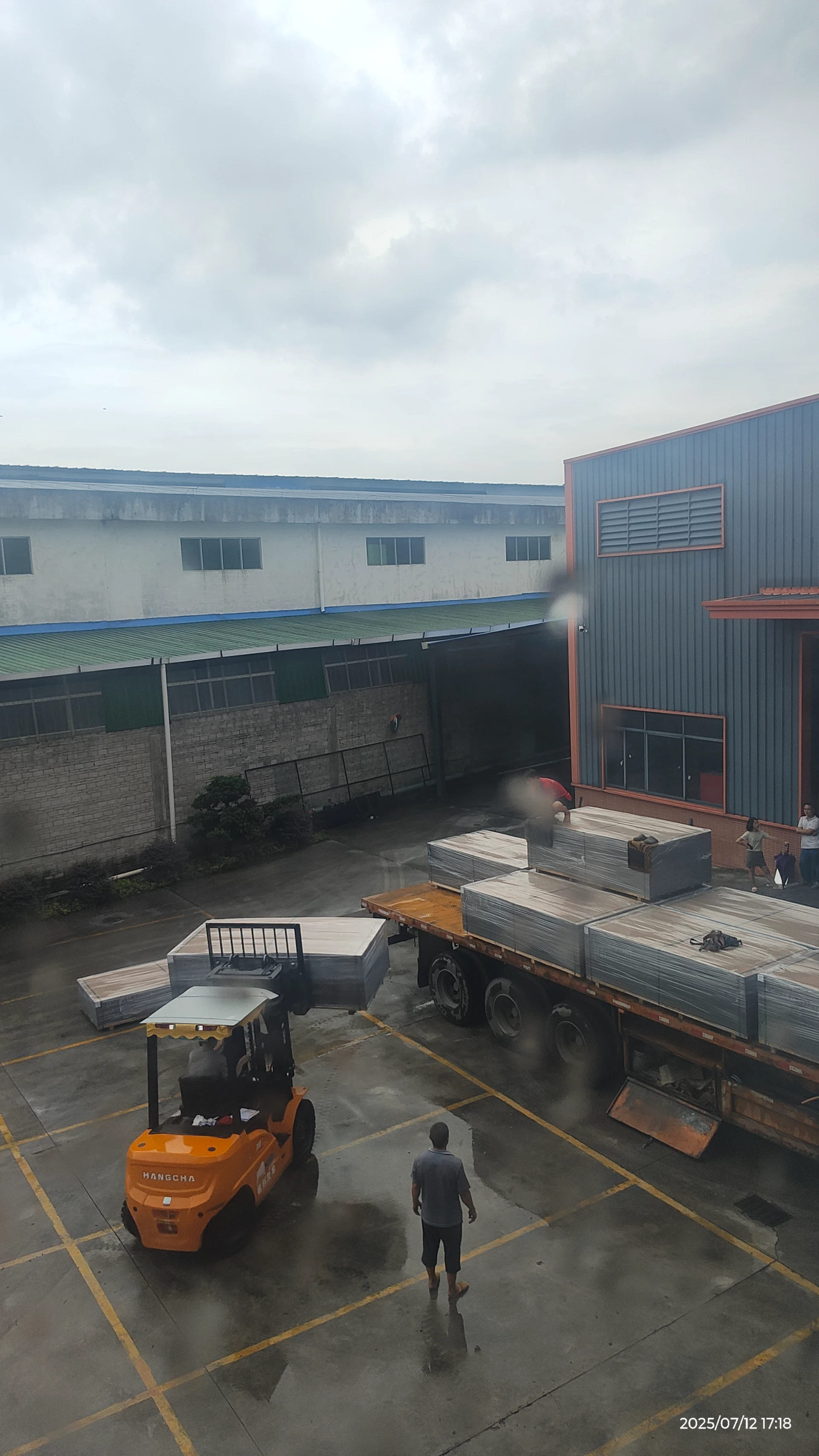
Tinuod nga rekord sa aluminum composite panel Jiashuncai factory loading containers panahon sa ting-ulan, kalidad ug serbisyo kanunay online! Sa industriya sa aluminum plastic panel, ang tukma sa panahon nga paghatud mao ang sukaranan sa pagdaog sa pagsalig sa kustomer. Bisan pa, ang dili matag-an nga panahon, labi na ang kalit nga pag-ulan, kanunay nga mahimong usa ka dakong hagit sa proseso sa pagkarga sa mga sudlanan ug transportasyon. Ang ulan dili lamang makaapektar sa kaluwasan sa operasyon kondili makahulga usab sa kalidad sa produkto. Giunsa ang epektibo ug luwas nga pagkompleto sa pagkarga sa sudlanan sa mga adlaw sa ting-ulan, pagsiguro nga ang matag piraso sa aluminum plastic panel mosugod sa iyang panaw nga walay kasaypanan? Dili lamang kini gisulayan ang mga kapabilidad sa pagtubag sa emerhensya sa pabrika apan gipakita usab ang propesyonal nga espiritu ug pasalig sa mga kustomer. #jscaluminum
Reducing facade fading from strong UV exposure is one of the most common technical concerns raised by architects, contractors, and façade suppliers evaluating aluminum composite panel (ACP) materials for exterior projects. Prolonged sun exposure, combined with temperature swings, humidity, rainfall, and in some cases coastal or industrial conditions, places continuous stress on the coating layer of an aluminum composite panel. When the coating system is not designed for long-term exterior performance, color fading, gloss loss, and surface degradation can occur over time, affecting both the appearance and the perceived quality of a building façade. Foshan Jiashuncai Building Materials Co., Ltd., operating internationally under the brand JIASHUNCAI, addresses this exact challenge through its PVDF Aluminum Composite Panel product line, supported by more than 20 years of manufacturing experience since the company's establishment in 2003 in Foshan, Guangdong, China.