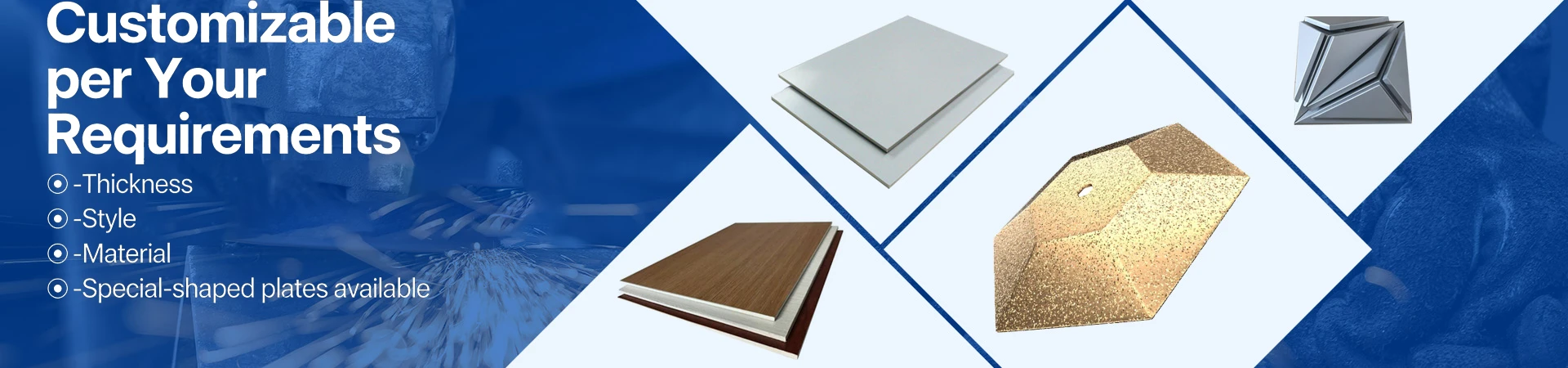
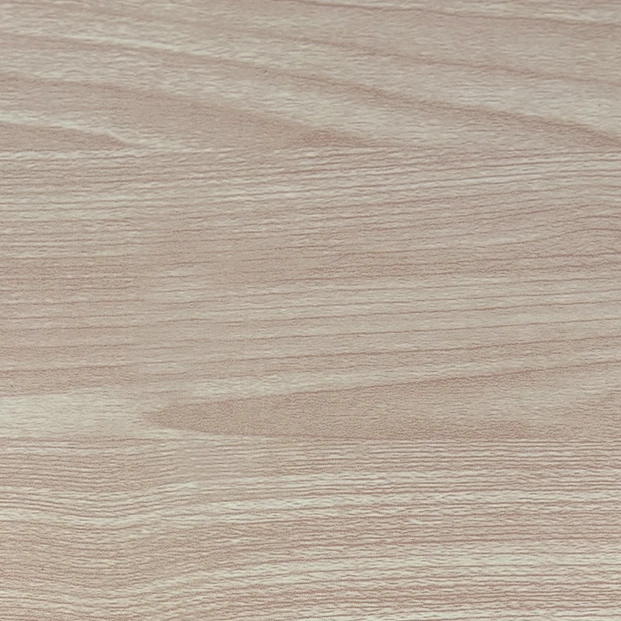
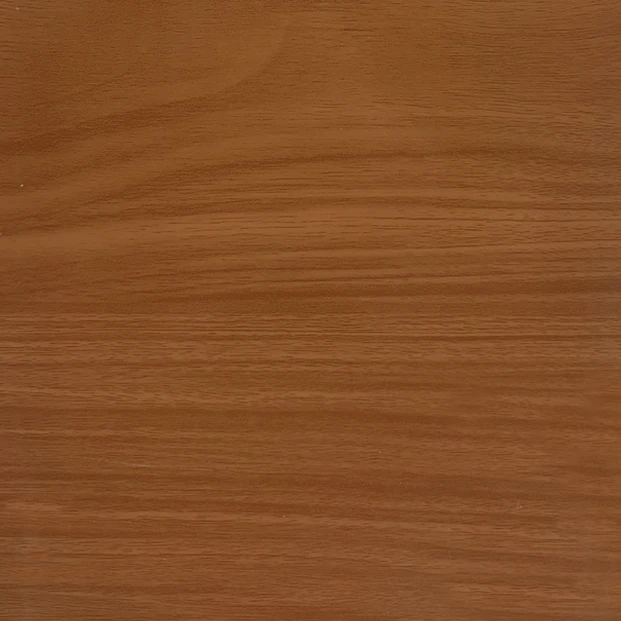
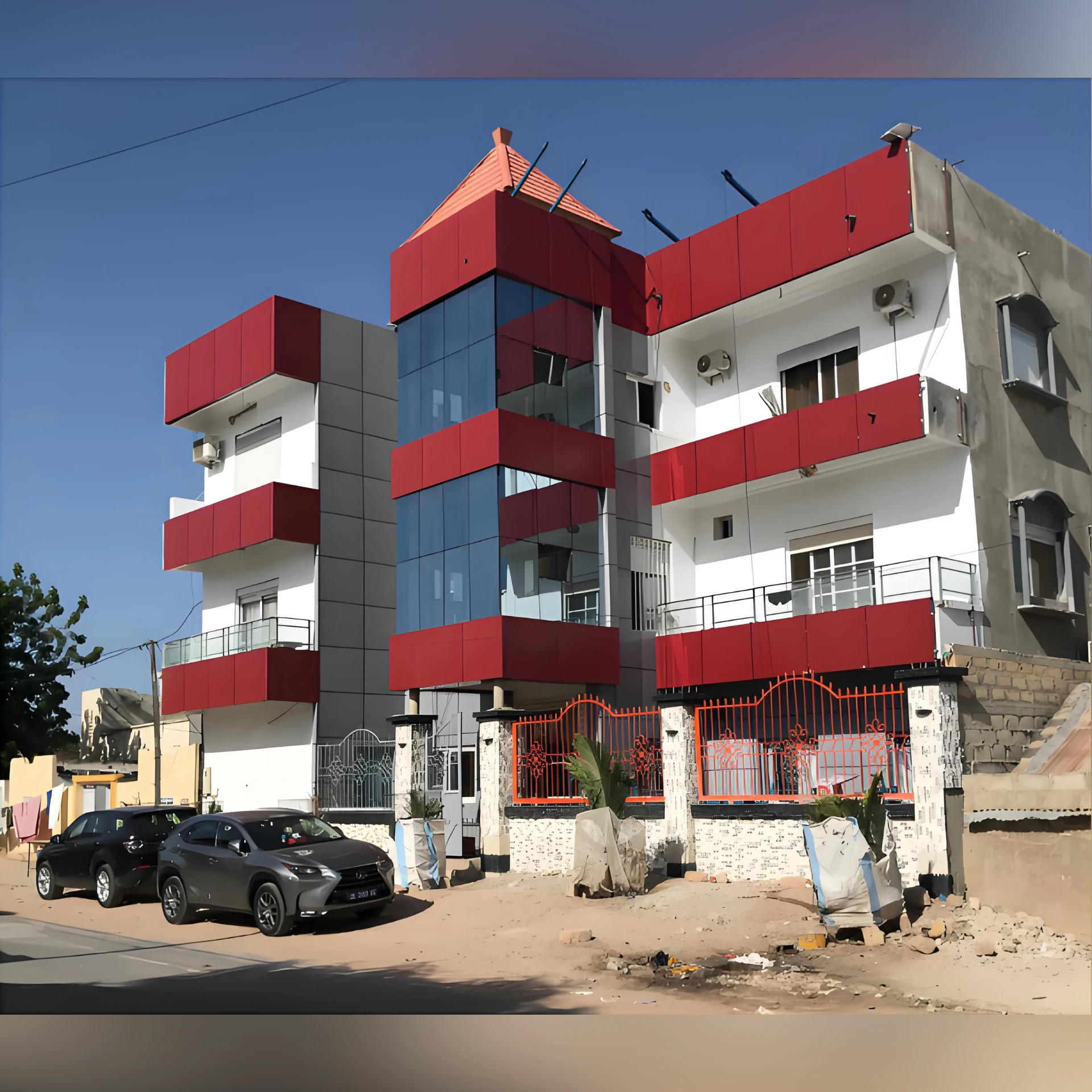
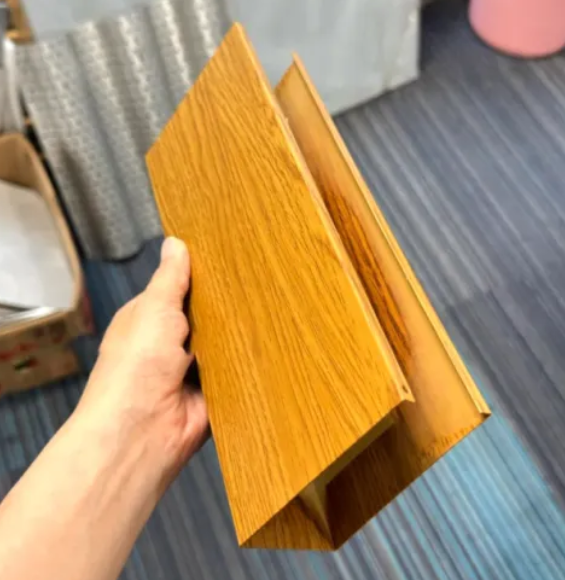
ACP PE sheets (Aluminum Composite Panels with PE core), also known as painéal ilchodach alúmanaim pe or simply ar an ACP, are widely used in construction, signage, and interior design for their lightweight, durable, and weather-resistant properties. However, to unlock their full potential in various projects—from storefront cladding to custom signage—proper cutting and shaping techniques are essential to ensure clean edges, structural integrity, and precise dimensions. As a professional manufacturer of Aluminum composite panels founded in 2003, Foshan Jiashuncai Building Materials Co., Ltd. specializes in high-quality painéal ilchodach alúmanaim pe production, supplying wholesalers across industries with consistent, easy-to-process acp ar siúl sheets. With years of expertise, we understand the unique needs of wholesalers and their clients (contractors, fabricators) when it comes to handling ar an ACP—this article breaks down step-by-step guidelines for cutting and shaping ACP PE sheets, along with pro tips to avoid common mistakes and maximize efficiency.
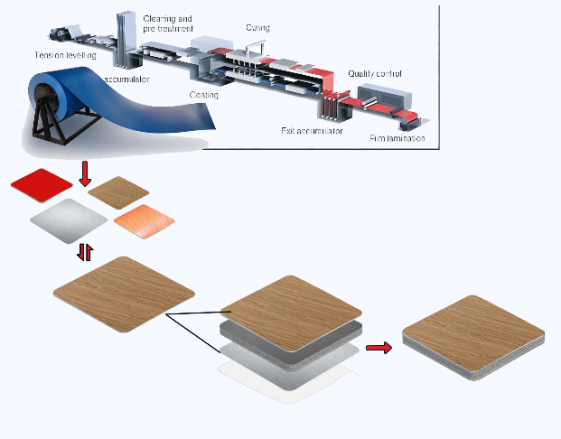
Essential Tools for Cutting Pe Aluminium Composite Panel
- Hand Tools for Small-Scale Cuts: For precise, small-volume cutting of painéal ilchodach alúmanaim pe, hand tools are ideal for wholesalers’ clients working on custom projects. A sharp utility knife (with replaceable blades) works well for scoring and snapping thin acp ar siúl sheets (3-4mm thickness)—score the aluminum surface along the cut line 3-4 times, then bend the sheet gently to snap it along the scored edge. For curved cuts, a jigsaw with a fine-tooth blade (10-14 teeth per inch) prevents aluminum chipping, while a file or sandpaper (240-grit) smooths rough edges post-cut. Foshan Jiashuncai recommends providing these basic tool lists to wholesalers, as they help end-users avoid damaging ar an ACP sheets due to improper tool use. A wholesaler supplying interior designers noted that including tool guides with painéal ilchodach alúmanaim pe orders reduced client complaints by 40%.
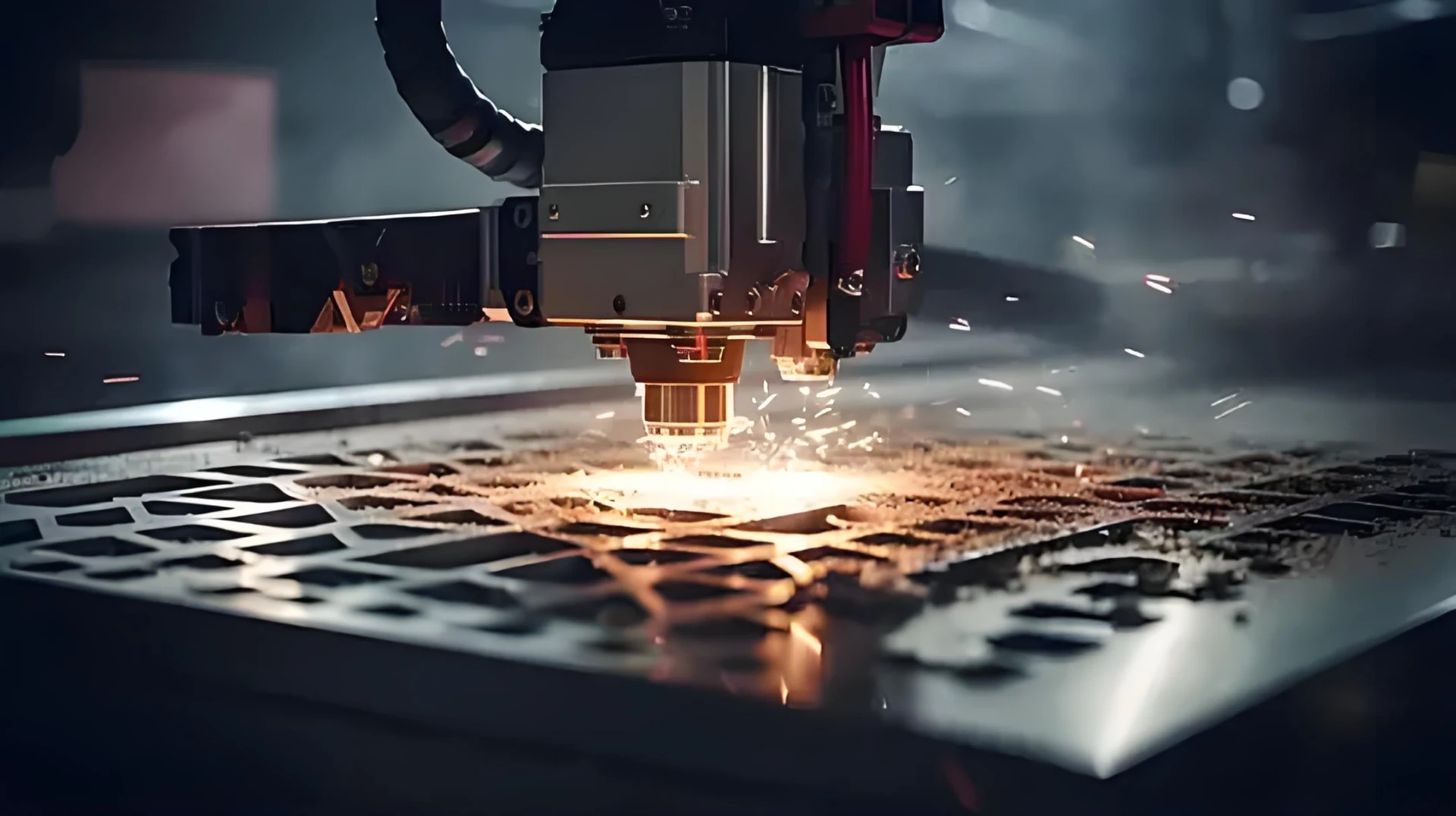
- Power Tools for Large-Volume Processing: For contractors or fabricators handling bulk ACP PE sheets (e.g., construction cladding projects), power tools boost efficiency without compromising quality. A circular saw with a carbide-tipped blade (designed for aluminum) delivers straight, fast cuts for large acp ar siúl sheets—set the saw to a low speed (2,000-3,000 RPM) to prevent the PE core from melting. A router with a straight bit is perfect for shaping edges (e.g., beveled or rounded edges) on ar an ACP, while a panel saw (with a dust collection system) keeps workspaces clean and reduces aluminum dust inhalation. Foshan Jiashuncai’s painéal ilchodach alúmanaim pe is engineered with a dense, uniform PE core that minimizes melting and chipping during power tool use—ensuring consistent results across large batches.
Step-by-Step Guide to Cutting ACP PE Sheets
|
Step
|
Actions for Cutting Pe ACP
|
Key Tips for Wholesalers to Share
|
Ideal For (Project Type)
|
|
1. Measure and Mark
|
Use a measuring tape and pencil to mark cut lines on the aluminum surface of acp ar siúl; use a straightedge (metal, not plastic) to draw straight lines.
|
Advise clients to mark both sides of thick painéal ilchodach alúmanaim pe (5mm+) for double-checking.
|
Construction cladding, large signage panels
|
|
2. Secure the Sheet
|
Clamp ACP PE sheets to a stable workbench (use soft clamps to avoid aluminum surface scratches); ensure the cut line hangs over the bench edge.
|
Remind users not to over-clamp—excess pressure can warp thin ar an ACP sheets (3mm or less).
|
Custom signage, interior wall panels
|
|
3. Cut the Sheet
|
For hand cutting: Score, snap, then smooth edges. For power tools: Cut slowly, keep the blade perpendicular to avoid angled edges.
|
Recommend testing cuts on scrap acp ar siúl pieces first—critical for new users or unique project shapes.
|
All projects, especially first-time ar an ACP users
|
|
4. Finish Edges
|
Use sandpaper (240-grit) or a file to smooth burrs on aluminum edges; wipe away dust with a dry cloth to inspect for uneven cuts.
|
Note that smooth edges are vital for painéal ilchodach alúmanaim pe installation (e.g., fitting into frames).
|
Cladding, furniture panels, decorative elements
|
Shaping Techniques for Pe Acp Sheets
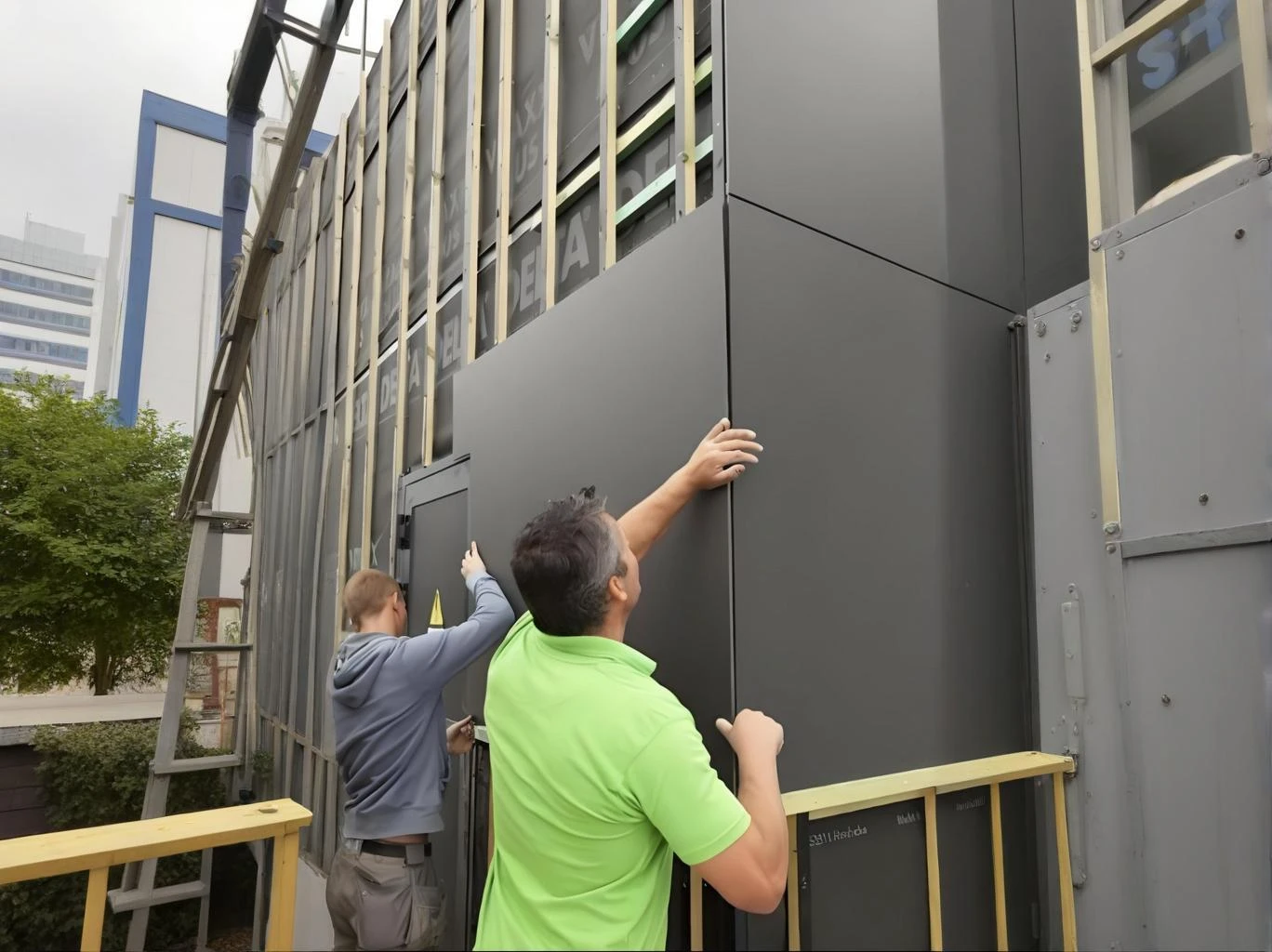
- Bending and Forming for Curved Designs: Ar an ACP sheets can be bent into gentle curves (for applications like rounded signage or interior arches) with the right technique. First, score the aluminum surface along the bend line (without cutting through the PE core) to weaken the aluminum—this prevents cracking. Then, use a bending brake (manual or hydraulic) to slowly bend the sheet to the desired angle (max 90° for most painéal ilchodach alúmanaim pe). For tighter curves, heat the aluminum surface slightly with a heat gun (low setting, 150-200℃) to increase flexibility, but avoid overheating (it can melt the PE core). Foshan Jiashuncai’s acp ar siúl has a heat-resistant PE core that withstands mild heating, making it easier for fabricators to create custom shapes. A wholesaler supplying construction companies reported that clients praised the bendability of our ar an ACP for curved storefront cladding.
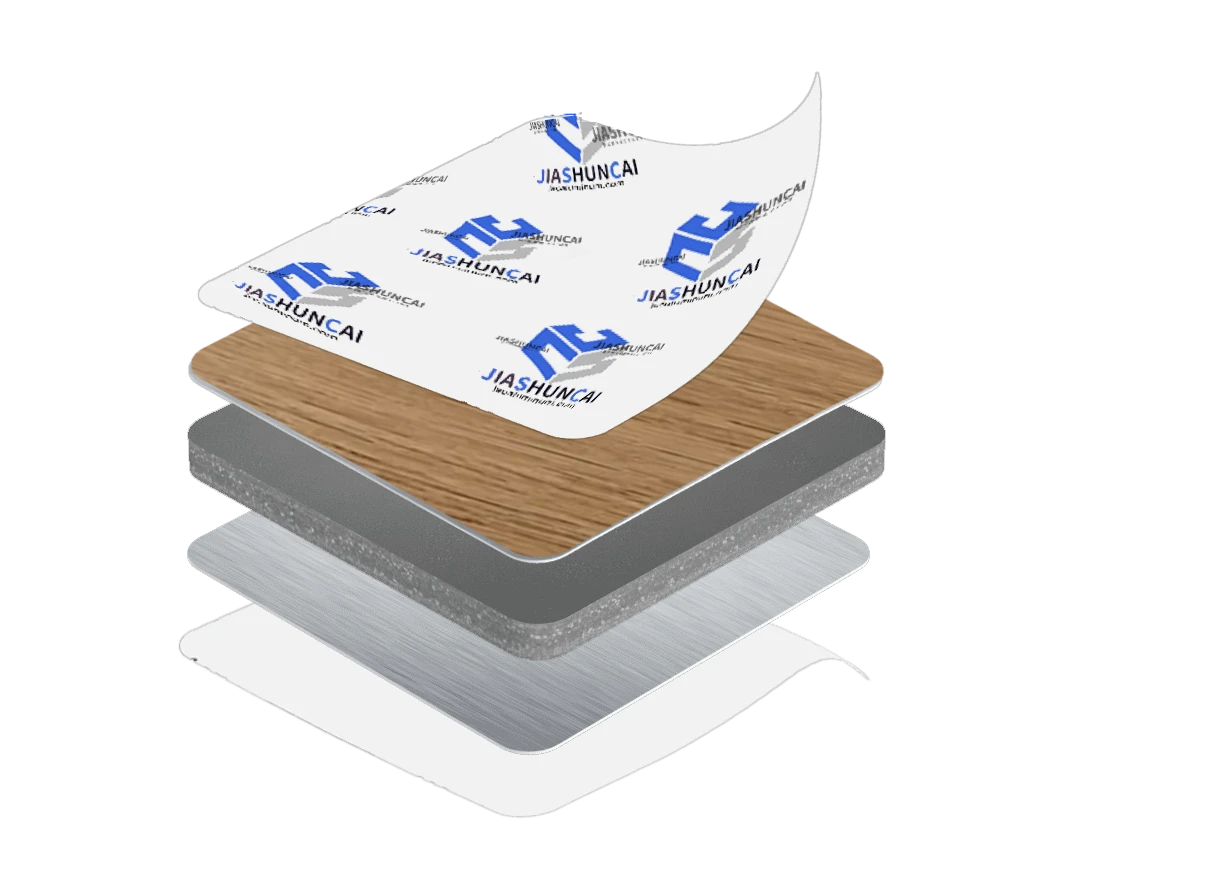
- Routing and Profiling for Detailed Edges: For projects requiring intricate edges (e.g., decorative wall panels, furniture fronts), routing ACP PE sheets with a router and specialized bits creates clean, professional results. A straight bit shapes square edges, while a round-over bit adds soft curves—always route the aluminum surface first, then the PE core, to avoid tear-out. For wholesalers, emphasizing the machinability of painéal ilchodach alúmanaim pe is key: Foshan Jiashuncai’s panels have a consistent aluminum thickness (0.15-0.3mm) that ensures even routing, unlike cheaper acp ar siúl sheets with uneven aluminum layers that cause bit jamming.
Common Mistakes to Avoid When Handling Pe Aluminium Composite Panel
- Using Dull Blades or Incorrect Bits: Dull utility knife blades or saw bits tear the aluminum surface of painéal ilchodach alúmanaim pe, leaving ragged edges that require extra finishing. Foshan Jiashuncai advises wholesalers to remind clients to use sharp, aluminum-specific blades—dull tools not only ruin the sheet but also increase the risk of accidents (e.g., slipping blades). For power tools, carbide-tipped blades last 3x longer than standard steel blades when cutting ar an ACP, making them a cost-effective choice for bulk projects.
- Ignoring Safety Precautions: Cutting and shaping acp ar siúl generates aluminum dust and sharp edges, so safety gear is non-negotiable. End-users should wear safety glasses (to protect against flying debris), work gloves (to avoid cuts from aluminum edges), and a dust mask (when using power tools). Wholesalers can add value by including safety checklists with painéal ilchodach alúmanaim pe orders—this not only protects users but also reduces liability for both wholesalers and manufacturers. Foshan Jiashuncai prioritizes safety in acp ar siúl production, ensuring smooth aluminum surfaces that minimize edge sharpness, but proper gear remains essential.
Pe Acp FAQS
What Thickness of Pe Aluminium Composite Panel Is Easiest to Cut and Shape?
For most cutting and shaping projects, painéal ilchodach alúmanaim pe with a thickness of 3-4mm is the easiest to handle—it balances flexibility (for bending) with stability (for straight cuts). Thinner sheets (2mm or less) are prone to warping during cutting, while thicker sheets (5mm+) require more powerful tools and extra effort to shape. Foshan Jiashuncai offers acp ar siúl in 3mm, 4mm, and 5mm thicknesses, with the 3mm option being the top choice for wholesalers supplying fabricators and small-scale contractors. A wholesaler serving interior designers noted that 3mm ar an ACP accounted for 60% of their orders due to its ease of processing.
Can Pe Acp Sheets Be Cut Wet to Reduce Dust?
Yes—wet cutting (using a small amount of water to dampen the cut line) is safe for ar an ACP and effective at reducing aluminum dust, making it ideal for indoor projects. However, avoid soaking the painéal ilchodach alúmanaim pe—excess water can seep into the PE core, causing delamination over time. Use a spray bottle to mist the cut line lightly during power tool cutting, and dry the sheet immediately after finishing. Foshan Jiashuncai’s acp ar siúl has a water-resistant PE core that withstands occasional wet cutting, but wholesalers should advise clients to limit moisture exposure to preserve long-term durability.
How Do You Fix a Chipped Edge on Pe Aluminium Composite Panel?
Minor chips on painéal ilchodach alúmanaim pe edges can be repaired with a few simple steps: 1) Sand the chipped area with 240-grit sandpaper to smooth rough edges; 2) Apply a small amount of aluminum-compatible epoxy (clear or color-matched) to fill the chip; 3) Let the epoxy cure for 24 hours, then sand lightly to match the surrounding surface. For larger chips (affecting the PE core), it’s best to cut a new piece—damaged PE core compromises the sheet’s structural integrity. Foshan Jiashuncai recommends wholesalers stock small epoxy tubes to include with ar an ACP orders, as this helps clients fix minor issues without wasting entire sheets.
Is Pe Acp Suitable for Outdoor Projects Requiring Shaping?
Absolutely—ar an ACP is designed for outdoor use, with weather-resistant aluminum layers and a UV-stabilized PE core that prevents fading or warping. When shaping painéal ilchodach alúmanaim pe for outdoor projects (e.g., exterior cladding, outdoor signage), ensure all cut edges are sealed with a weatherproof silicone caulk to prevent moisture from entering the PE core. Foshan Jiashuncai’s acp ar siúl meets international outdoor durability standards (e.g., AAMA 2605), making it a reliable choice for wholesalers supplying construction companies working on exterior projects. A wholesaler serving Western European contractors reported that our ar an ACP retained its shape and finish for 5+ years in outdoor installations.
What Support Does Foshan Jiashuncai Offer Wholesalers for Pe Aluminium Composite Panel?
Foshan Jiashuncai provides comprehensive support to wholesalers: 1) Sample kits—small ar an ACP sheets for clients to test cutting/shaping before bulk orders; 2) Technical guides—step-by-step manuals and videos on cutting/shaping painéal ilchodach alúmanaim pe, customizable with wholesalers’ branding; 3) Customization options—pre-cut acp ar siúl sheets to specific dimensions (reducing end-user labor); 4) Logistics support—secure packaging to prevent damage during transit, with flexible shipping schedules for bulk orders. Our team of aluminum composite panel experts is also available 24/7 to answer technical questions. To explore our high-quality painéal ilchodach alúmanaim pe range and wholesale support services, visit our company webpage today!