alang sa mga pumapalit sama sa mga kontraktor ug mga kompanya sa disenyo. Makapadala usab kami og mga inhenyero alang sa on-site nga tabang sa serbisyo.
Mga Solusyon sa Proyekto
Kapabilidad sa Disenyo sa Proyekto
Magamit ang Garantiya
One-stop nga Pagpamalit
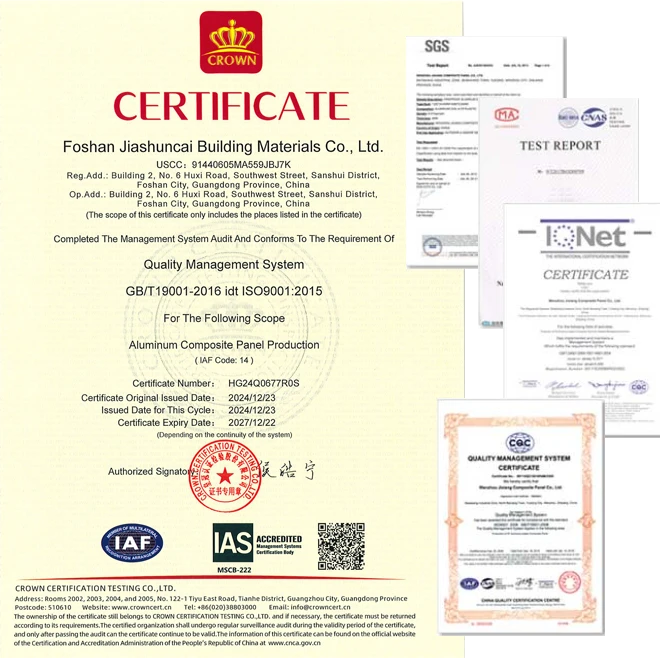
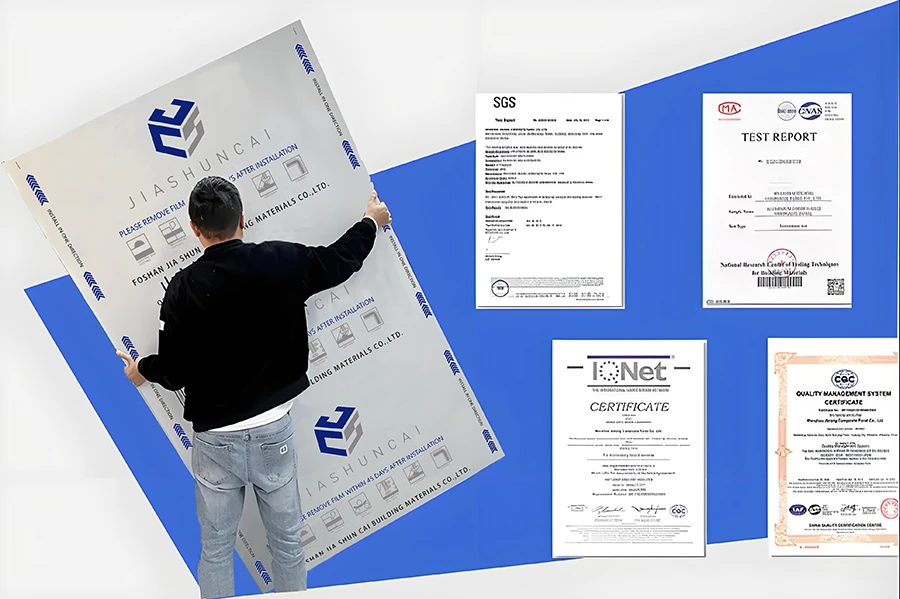
Sertipiko sa Kwalipikasyon sa Materyal ug Report sa Pagsulay
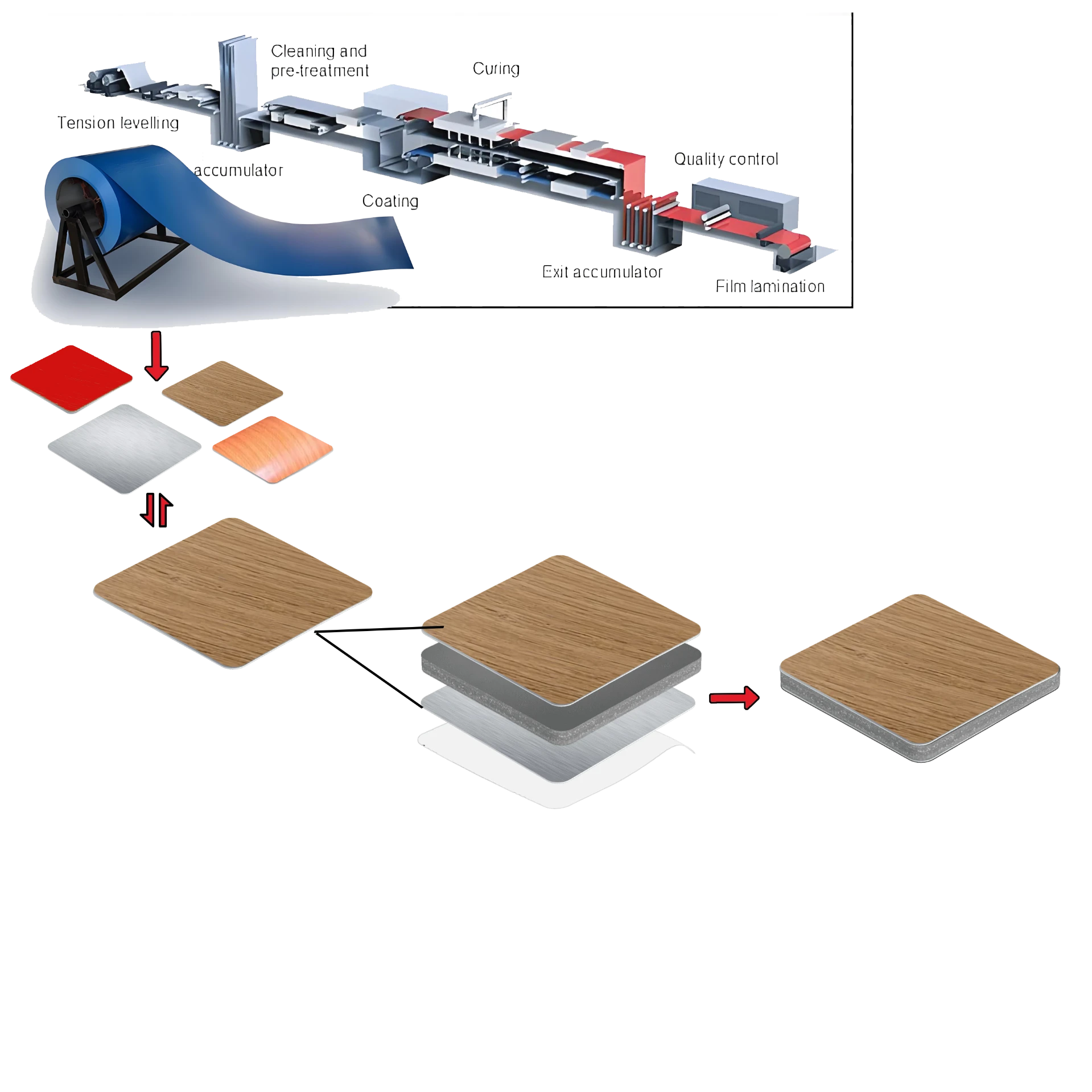
Propesyonalismo ug Kasinatian Sa miaging 23 ka tuig, si Jiashuncai kanunay nga nagsunod o nag-una pa sa teknikal nga pag-uswag sa natad sa aluminum composite panels, metal ceilings, curtain walls ug metal-related nga produksyon. Ang among team sa engineering wala mohunong sa pagpangita og mas maayong mga solusyon aron mahimo ang among produkto nga mas kasaligan ug lig-on. Nag-import kami sa bug-os nga awtomatiko nga linya sa linya sa produkto ug katukma.
A:Libre nga probisyon: pagtuki sa posibilidad sa proyekto + case study sa susamang mga lugar.
P: Mahimo bang i-install ang mga aluminum Composite panel sa mga komplikadong curved facades? Sa unsang paagi maseguro ang katukma?
A: Napasibo nga pagpatuman, teknikal nga mga solusyon naglakip sa: • 3D laser scanning + BIM modeling: tukma nga pagkuha sa bungbong ibabaw data, prefabricate dili regular nga mga panel; • Adjustable transition system: naggamit sa universal angle codes ug three-dimensional adjustable trusses, nga nagtugot sa ± 15mm nga pagtul-id; • Segmented hugot nga haom nga proseso: decomposes curved ibabaw ngadto sa daghang linear nga mga eroplano, pagpamenos sa tukma nga mga sayop. Naghatag kami og on-site nga pagsurbi ug mga serbisyo sa disenyo sa pagpalawom sa ibabaw.
P: Giunsa pagtubag sa mga ultra-high-rise nga mga bilding ang mga isyu sa pagsukol sa presyur sa hangin sa aluminum composite panel alucobond?
A: Panguna nga teknikal nga mga pagsukol: 1. Mechanical verification: Kalkulahin ang gibag-on sa mga panel ug ang densidad sa mga attachment point base sa lokal nga kantidad sa presyur sa hangin alang sa usa ka kausa sa 50 ka tuig nga panghitabo (pananglitan, ≥1.5 kN/㎡). 2. Gipalambo nga angkla: Paggamit og kombinasyon sa mga back bolts ug mechanical hanger para sa dual fixation (labing menos 6 ka attachment point kada panel). 3. Disenyo sa wind tunnel depressurization: Pag-instalar sa mga tinago nga mga agianan sa hangin sulod sa mga lutahan sa panel aron mabalanse ang internal ug external nga presyur sa hangin. Ang team naglakip sa structural engineers nga makahatag ug wind pressure calculation reports ug seismic resistance reports.
P: Giunsa paghimo ang mga instalasyon nga dili gub-on ang daan nga mga dingding sa panahon sa pag-ayo sa mga naglungtad nga mga bilding?
A: Innovative nga mga solusyon: • Dry construction method: Bag-ong base layer nga gihimo gamit ang light steel keel framework (80-150mm ang gilay-on gikan sa orihinal nga bungbong) aron malikayan ang mga isyu nga may kalabutan sa flatness sa daan nga mga bungbong; • Non-destructive nga pag-angkla: Paggamit sa kemikal nga mga angkla sa pagsulod sa insulation layer ug pagkab-ot sa structural layer, pagpugong sa vibration-induced cracking; • Dali nga plug-and-play nga sistema: Ang na-pre-install nga mga clip sa mga panel nagdugang sa on-site assembly efficiency sa 50%. Malampusong nahuman ang 17 ka proyekto sa pag-ayo, nga ang pinakapaspas nga oras sa pagkompleto mao ang 15 ka adlaw alang sa usa ka 1000 square meter nga proyekto.
P: Giunsa malikayan ang pagkondensasyon sa aluminum composite panels alucobond tungod sa bugnaw nga bridging sa bugnaw nga mga rehiyon?
A: Custom nga thermal break nga teknolohiya: Mga teknikal nga solusyon 1. Thermal break profile system → Ang mga profile naglakip sa PA66 nylon thermal break strips nga adunay thermal conductivity nga ≤0.3 W/(m·K). 2. Layered sealing structure → Closed-cell foam rods napuno sulod sa panel joints, gitabonan sa gawas sa elastic sealant. 3. Condensate drainage → Ang mga agianan sa tubig gibutang sa likod sa mga profile, nga nagkonektar sa mga vertical nga drainage duct. * Makahatag ug thermal simulation reports ug dedikado nga accessory packages para sa mga proyekto ubos sa -30°C.
Increasing Demand Drives Production Expansion
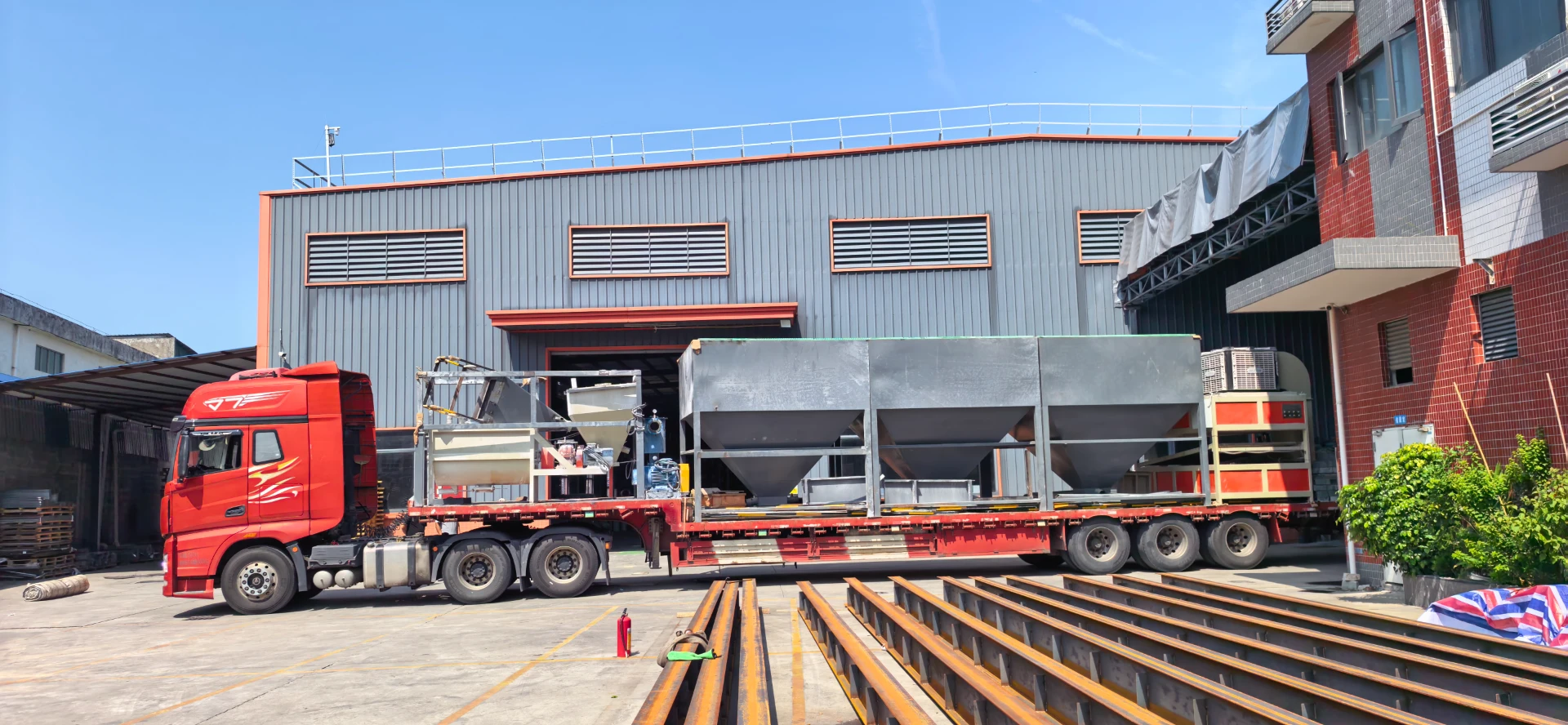
With the rapid growth of global demand for Aluminum Composite Panels (ACP), JIASHUNCAI is proud to announce the expansion of its manufacturing capacity.
Recently, a new production line has been successfully delivered to our factory and is currently under installation. This upgrade reflects the strong increase in orders from international markets and our commitment to providing fast delivery and stable supply.
Introduction: Strengthening Global Partnerships in ACP Industry
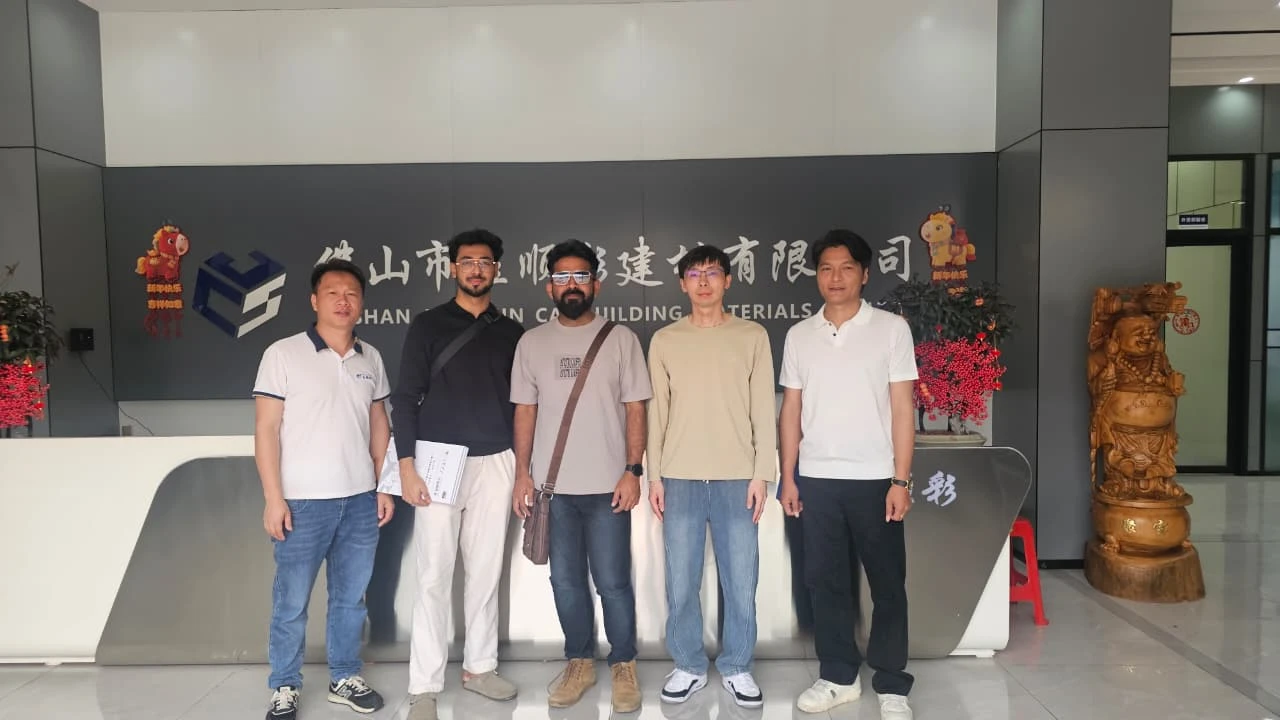
Recently, we were honored to welcome clients from India to visit our factory — Jiashuncai Aluminum Composite Panel (ACP) Manufacturer.
This visit marks an important step in strengthening international cooperation and reflects the growing demand for high-quality ACP panels in the Indian market.
Through face-to-face communication, factory inspection, and technical discussions, both sides gained deeper confidence for future collaboration.
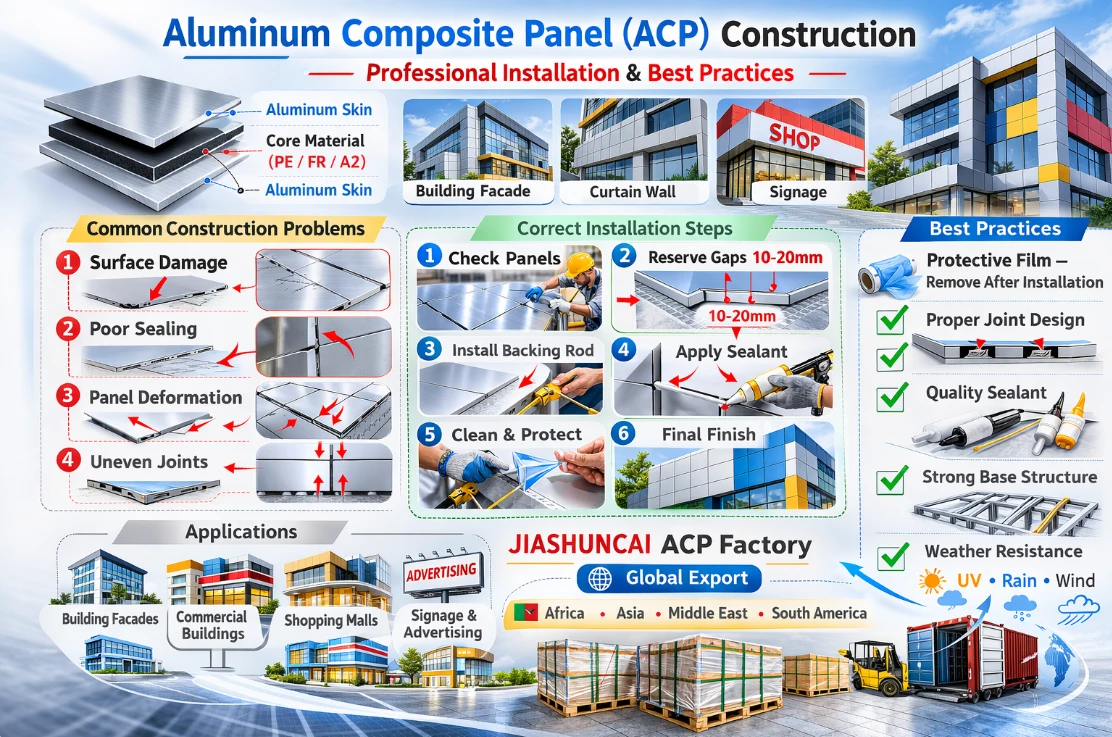
Introduction to Aluminum Composite Panel Installation
Aluminum Composite Panels (ACP) are widely used in modern architecture for building facades, curtain walls, signage systems, and interior decoration. Because ACP panels are lightweight, durable, and easy to fabricate, they have become one of the most popular cladding materials in commercial construction projects.
However, improper installation or construction mistakes can lead to problems such as panel deformation, poor sealing, surface contamination, and weak bonding. Understanding these issues is essential for contractors, architects, and construction companies working with ACP panels.
This article explains the most common aluminum composite panel construction problems and how to prevent them.